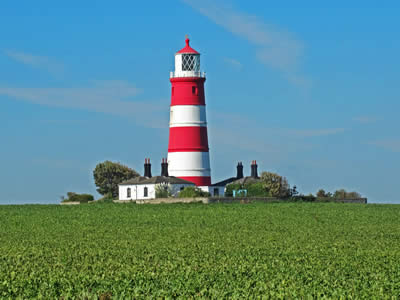
A lovely east coast village dominated by two main buildings - the candy striped lighthouse and the large village church with its tall tower.
An Introduction to Happisburgh
The lovely coastal village of Happisburgh (pronounced "Haisbro") is dominated by two main buildings - the red and white candy striped lighthouse and the large village church with its tall tower. Both of these buildings are located on mounds, giving wonderful views over the surrounding countryside. The pretty village lanes are lined with cottages, many of which are built from flint and thatch. The sandy beach extends for miles in both directions, but is dominated by the cliff protection schemes, helping to slow the rate of cliff erosion which has been pretty devastating in Happisburgh (some properties have been lost to the sea).
A car-park, lifeboat station and fine cafe, make nearby Cart Gap a popular place to walk along the Norfolk coast path towards Happisburgh or Sea Palling. The nearby gardens at East Ruston Old Vicarage are also well worth a visit.
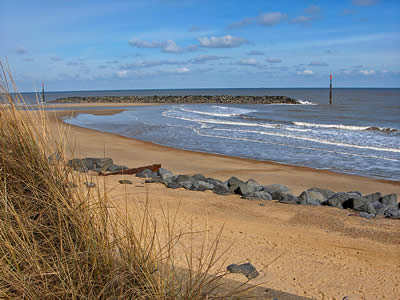
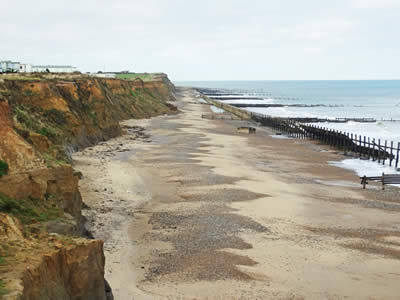
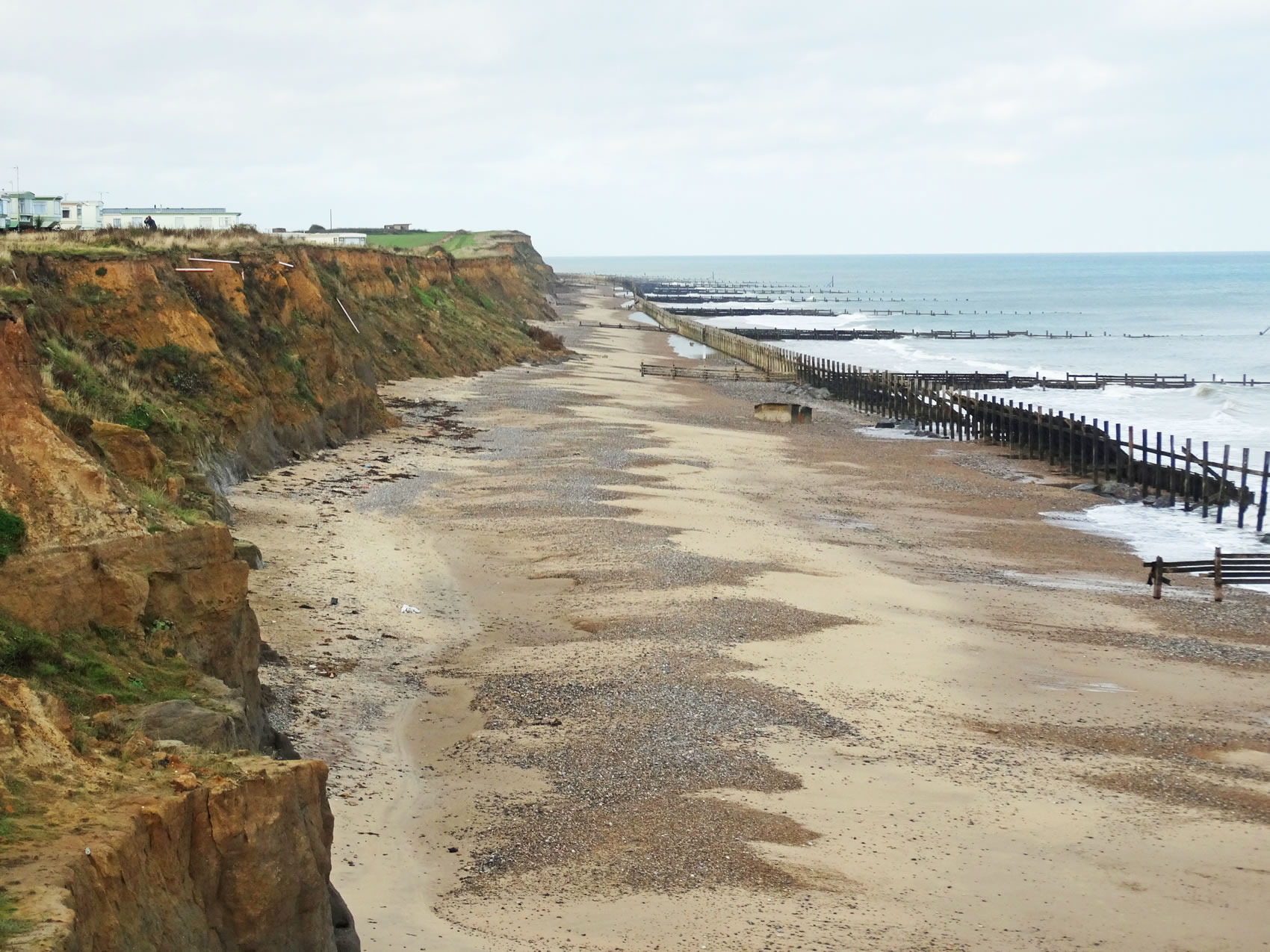
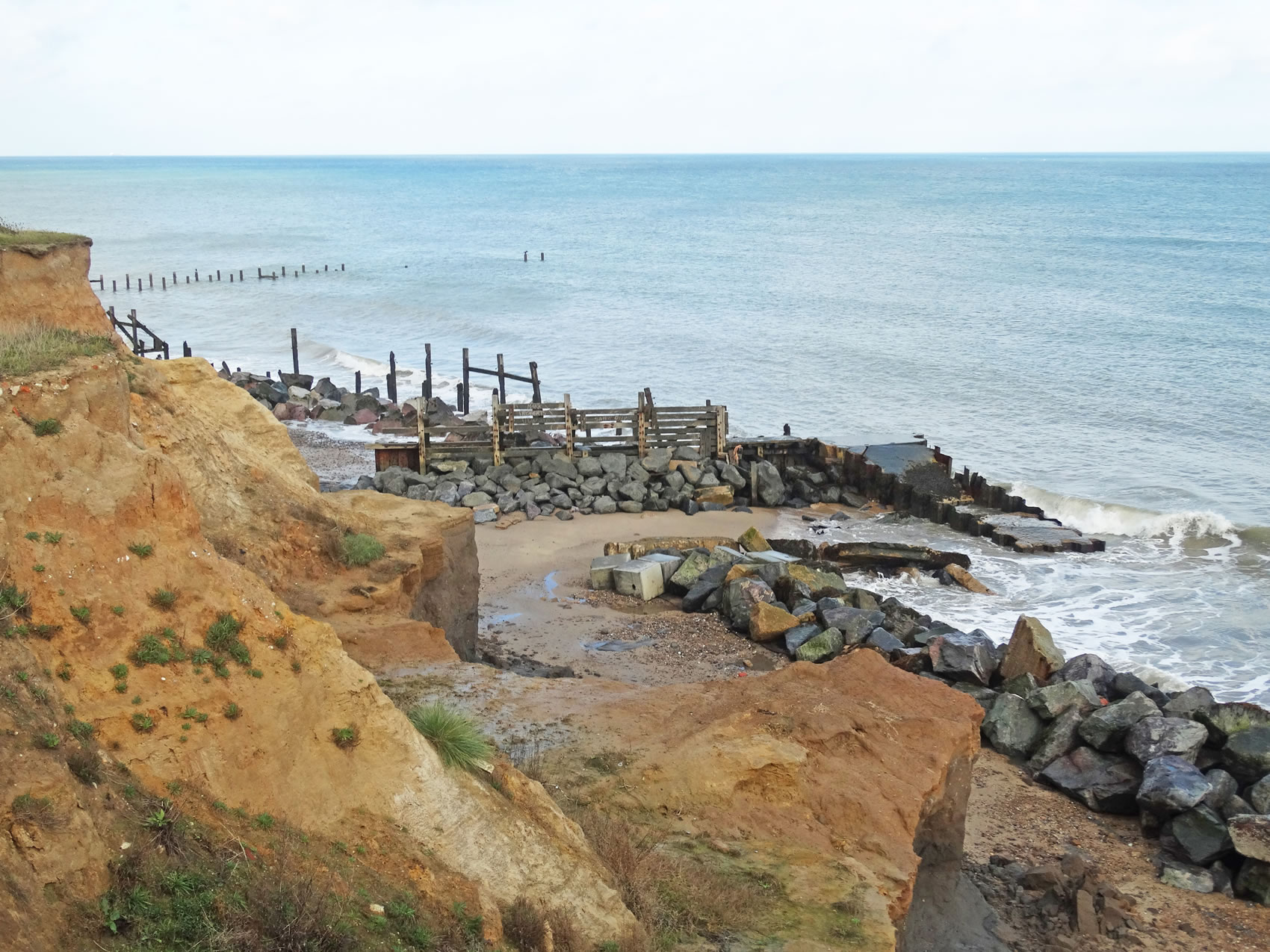
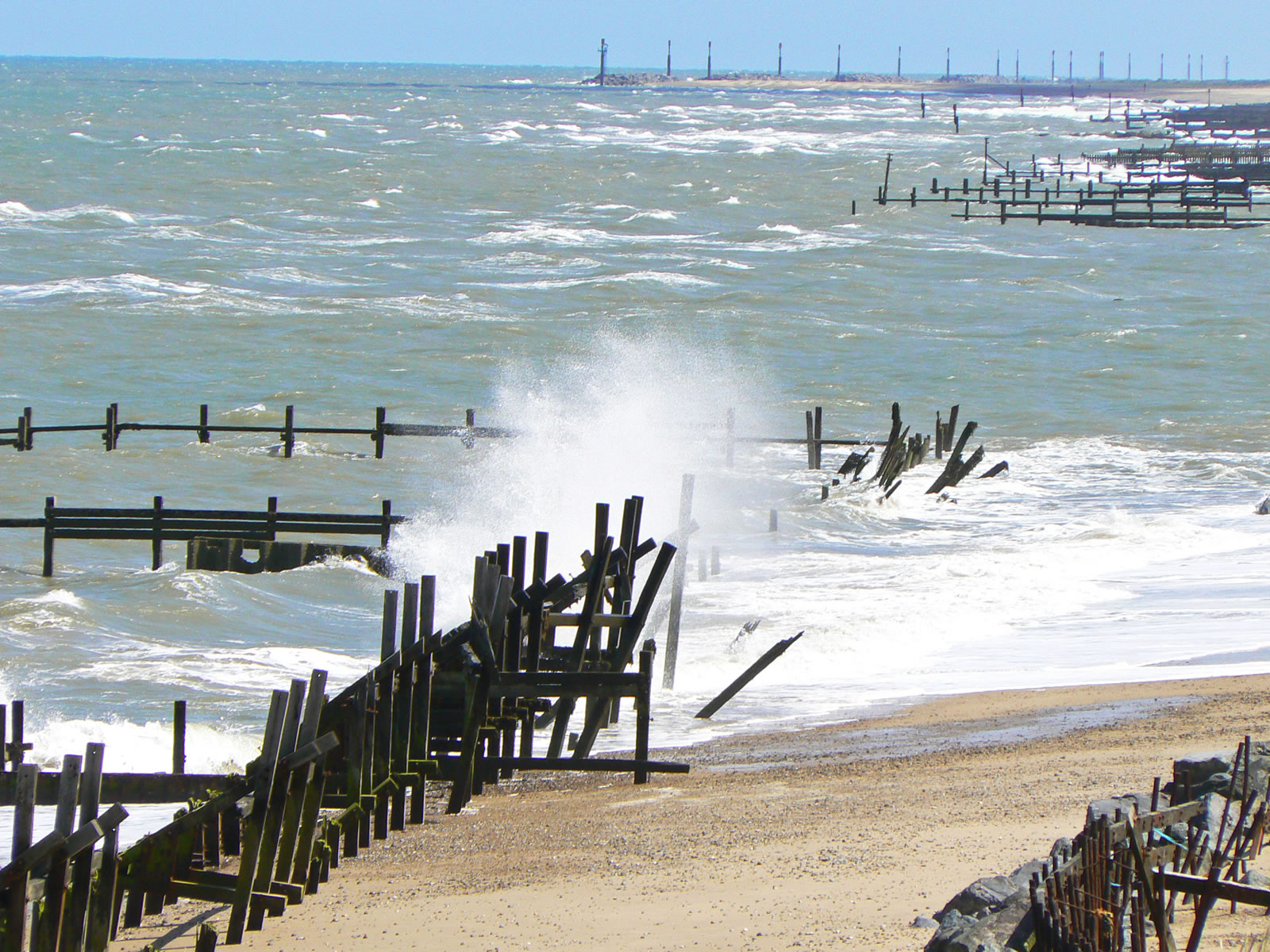
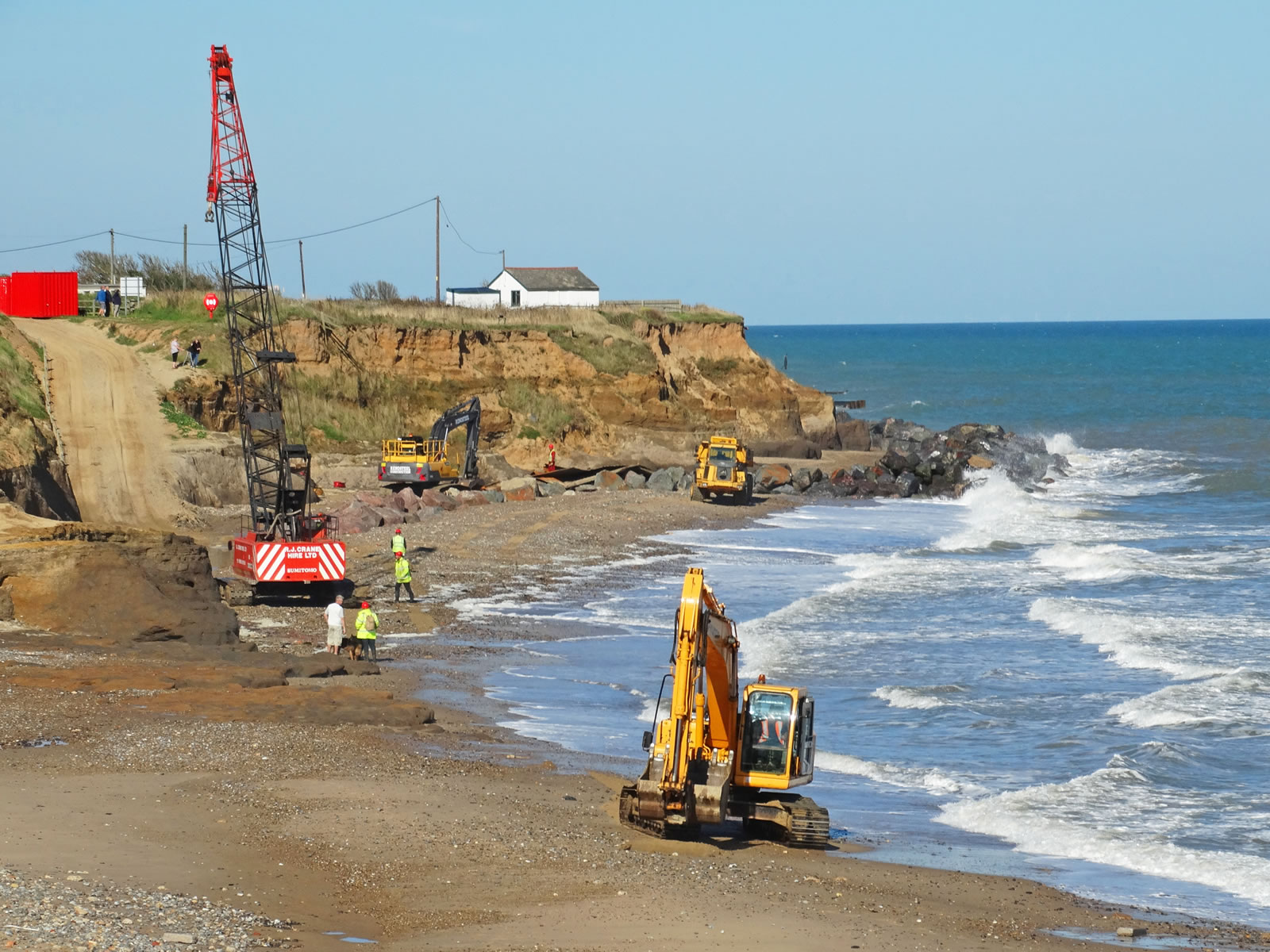
We start our tour of Happisburgh on the coast path. It is obvious that this section of coast has been subject to constant erosion and the exact line of the beach is forever moving inwards on some sections. Various methods to prevent this have been taken, including wooden barriers and more recently, piles of large rocks, but unfortunately it has not been successful and various properties have been lost to the power of the sea.
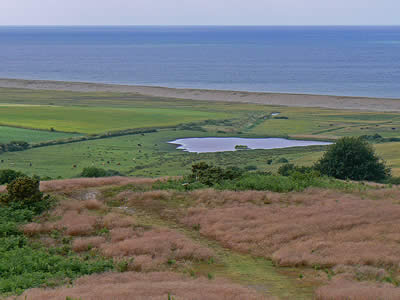
The view of Happisburgh from the coast path
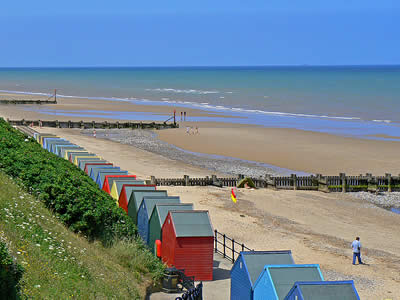
Happisburgh beach, looking North
The remains of various attempts to halt erosion
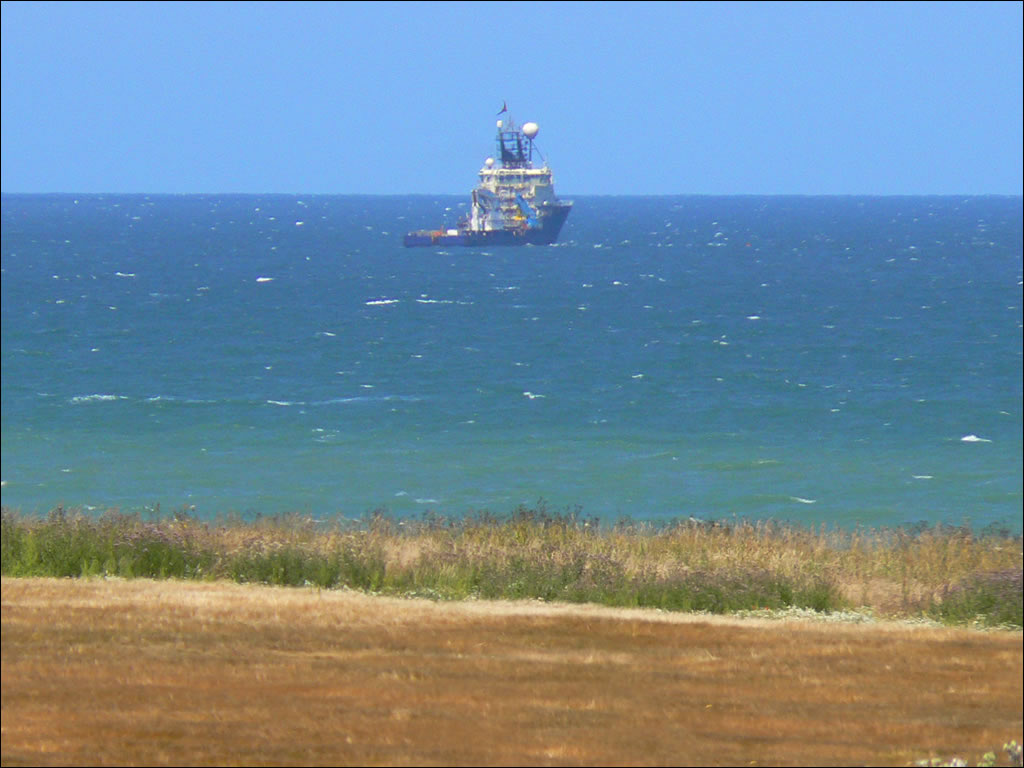
Sea waves causing coast erosion
Attempting to halt the cliff erosion
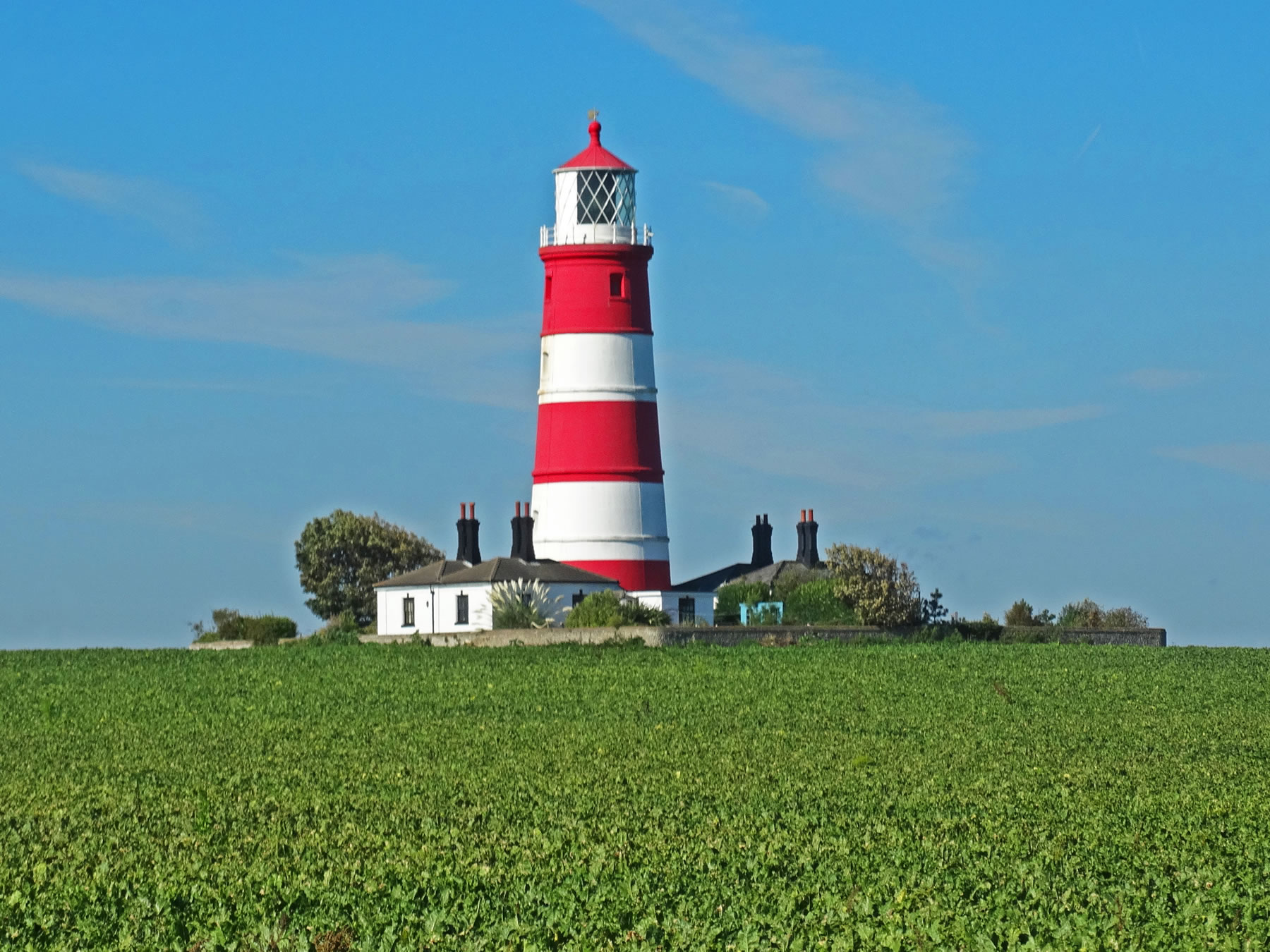
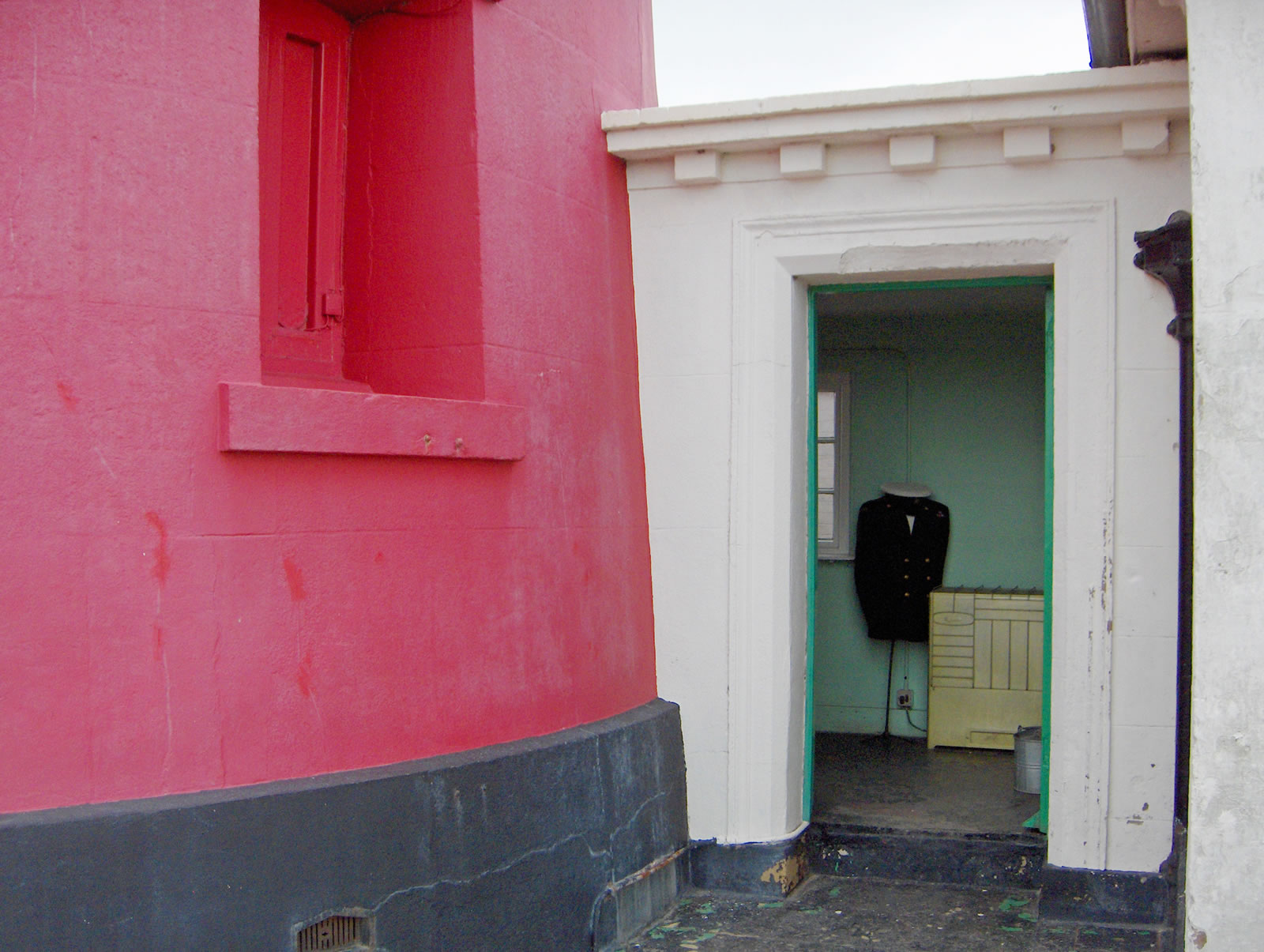
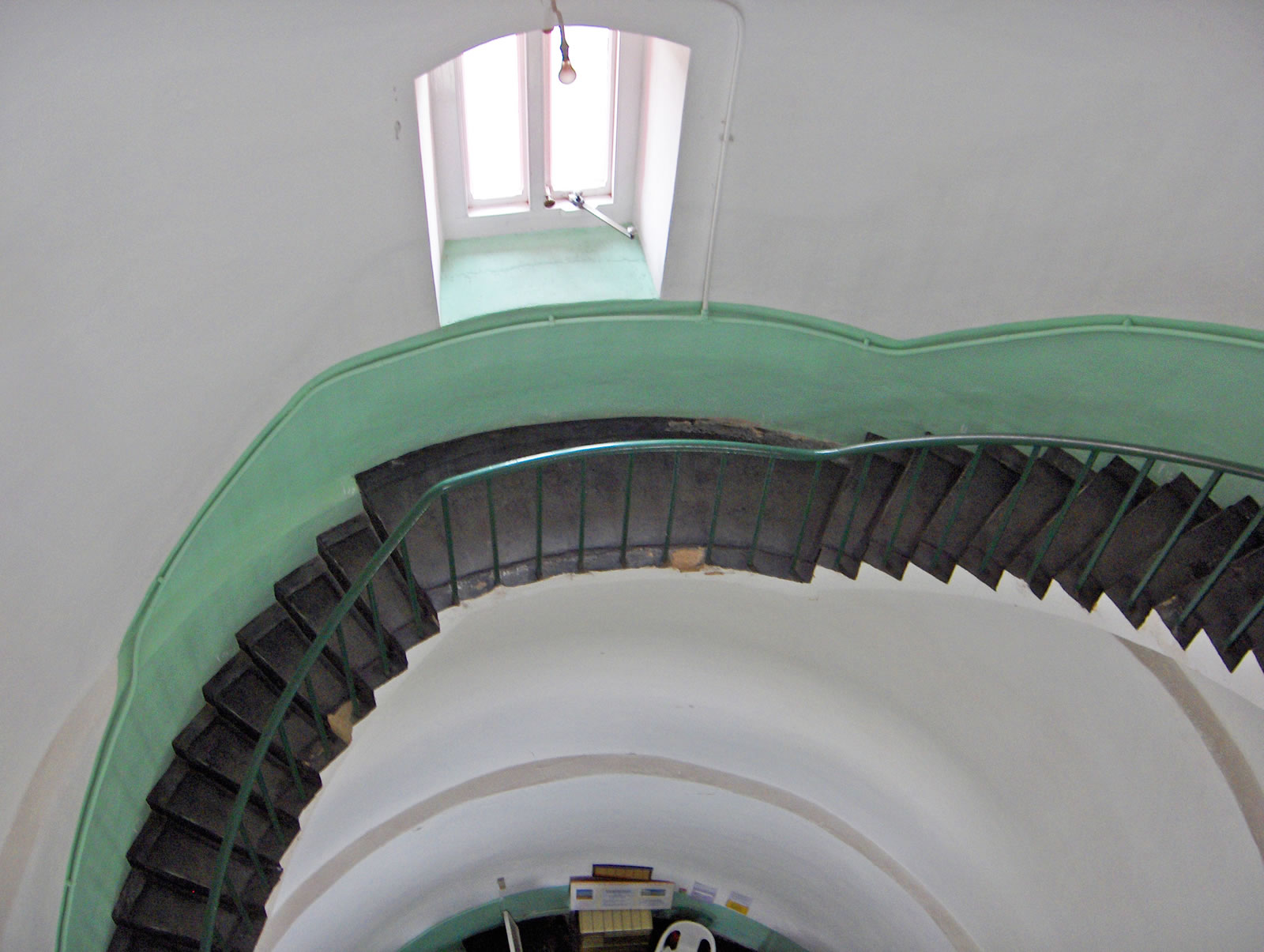
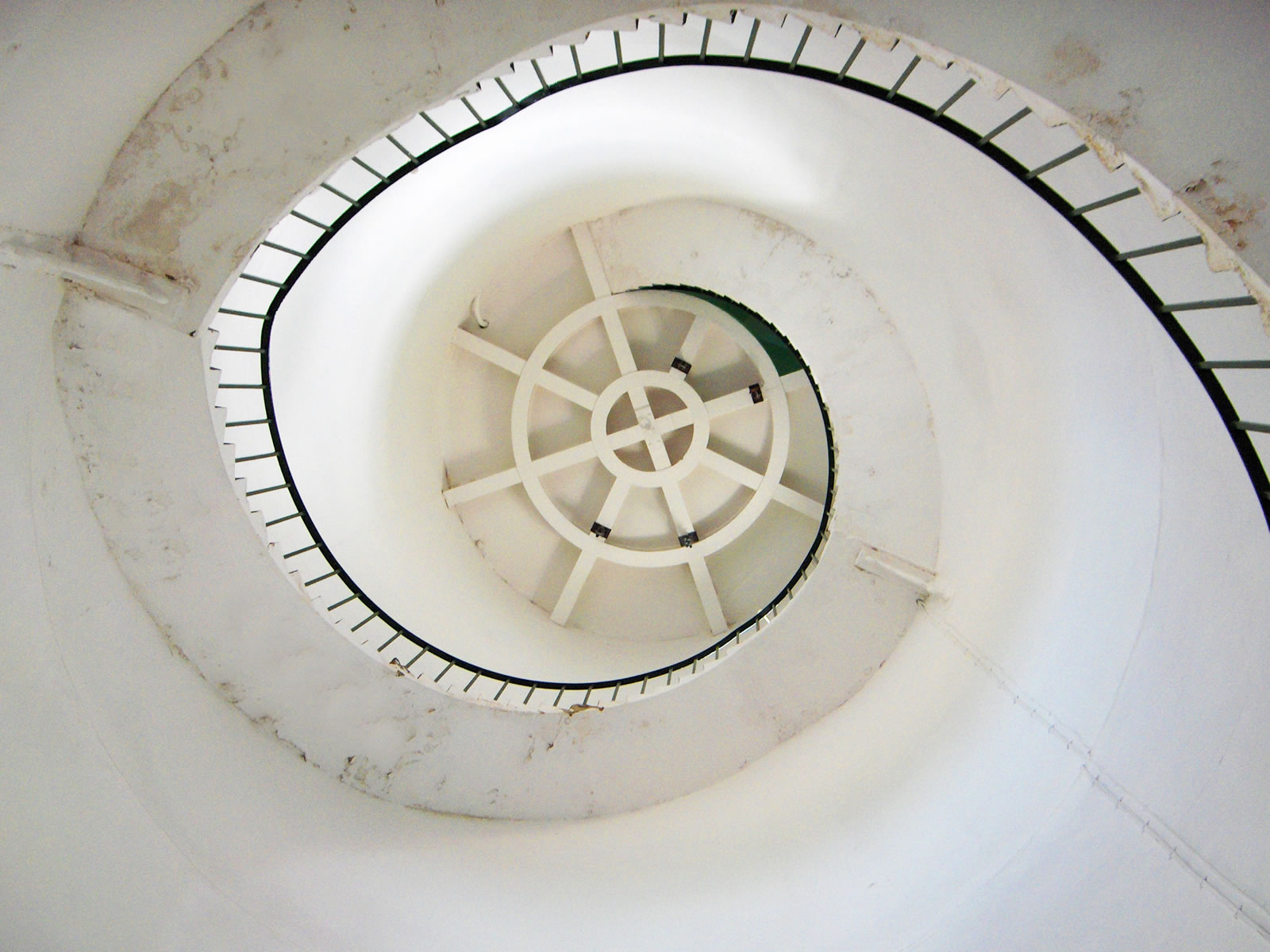
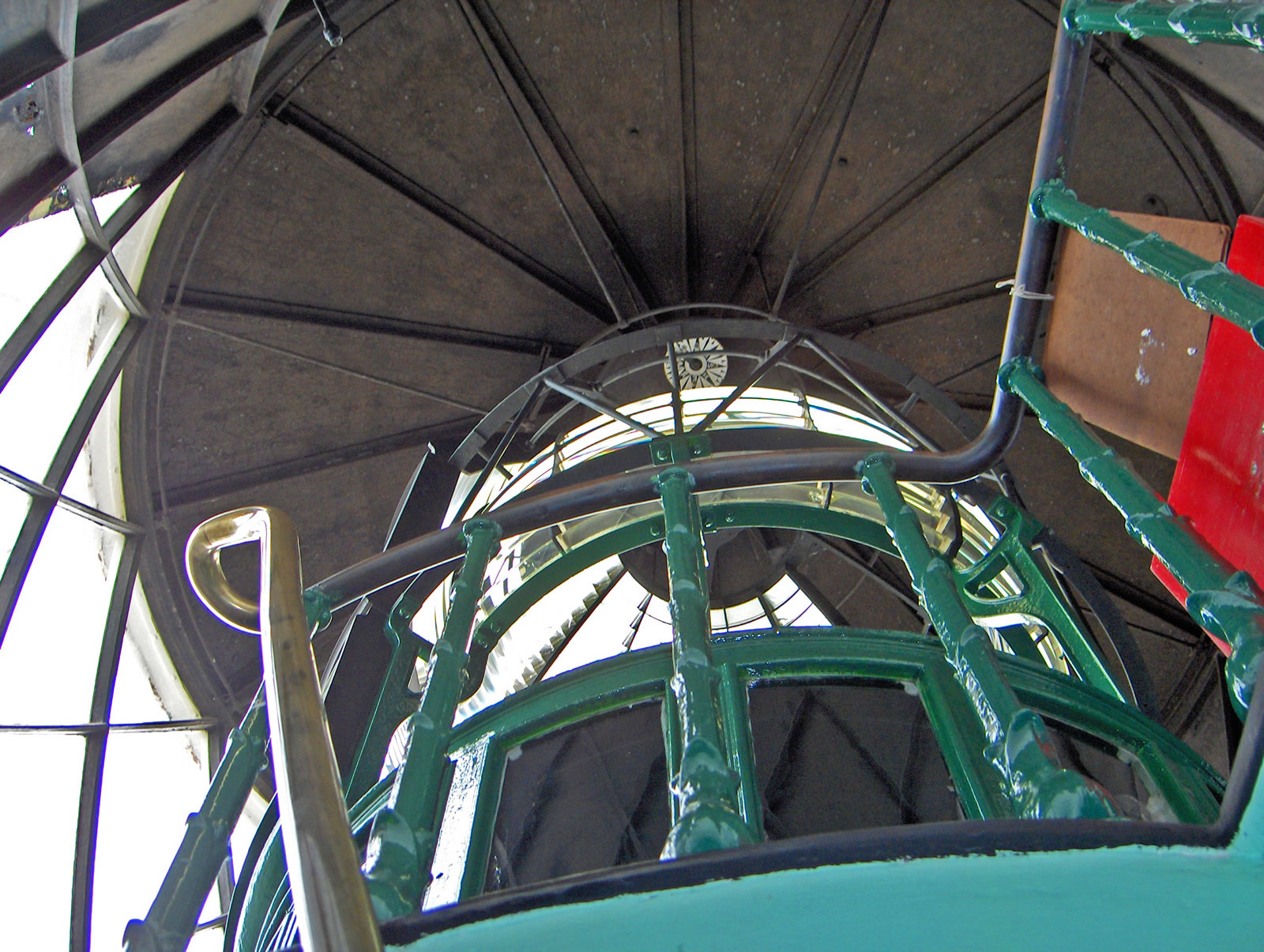
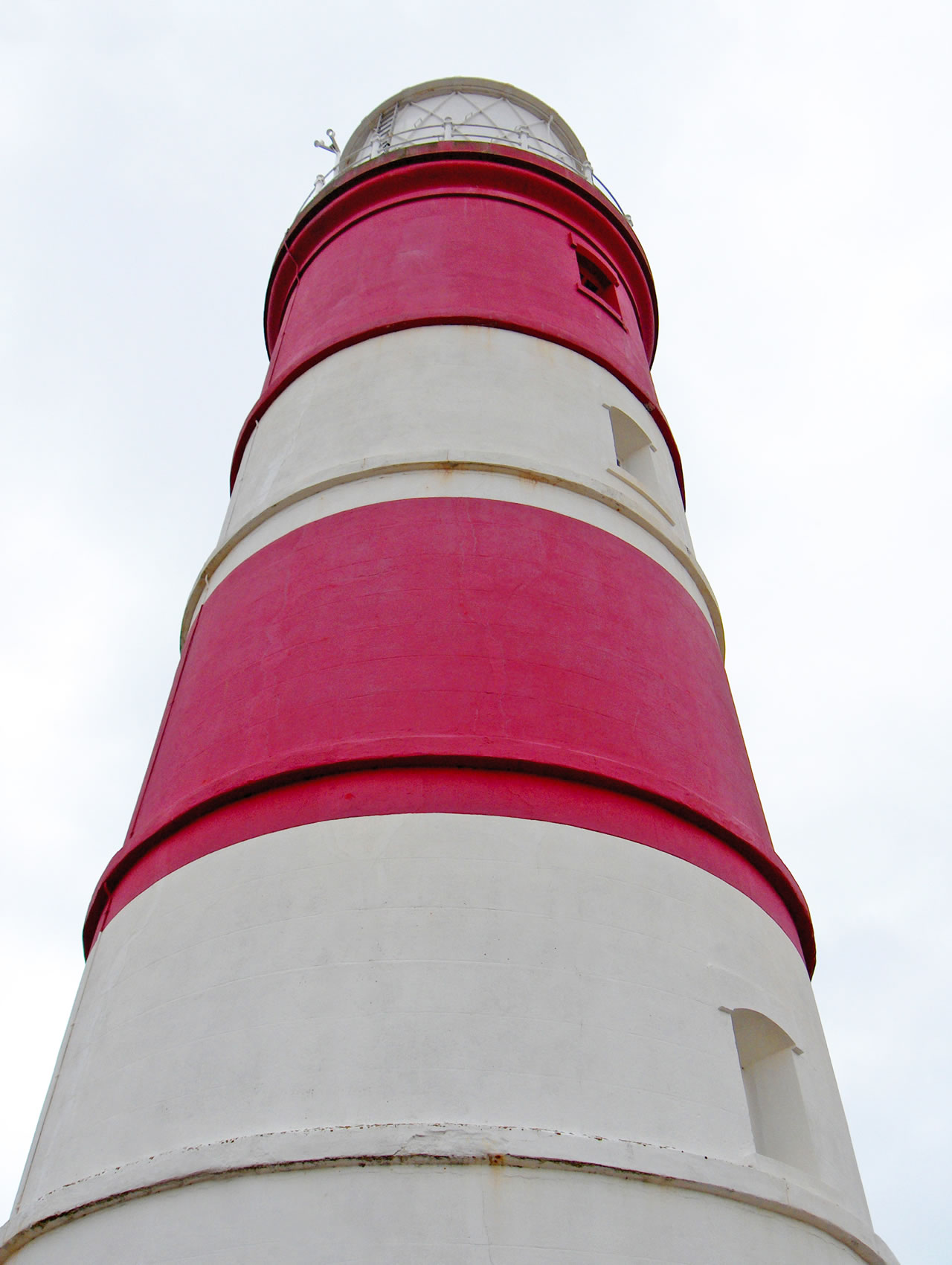
The red and white striped lighthouse was built in 1791, originally one of a pair - the pair formed leading lights marking safe passage around the southern end of the treacherous Happisburgh Sands - but it was not always effective, as the graves in the churchyard show. Happisburgh is the only independently operated lighthouse in the UK, having been declared redundant by Trinity House in 1987. The lighthouse opens its doors to the public on certain weekends during the year. Inside, the 96 stone steps wind their way up the inside to the light at the top (134 feet above sea level). When you reach the top, you can see the working lamp, 500 watts of light and visible for about 18 miles.
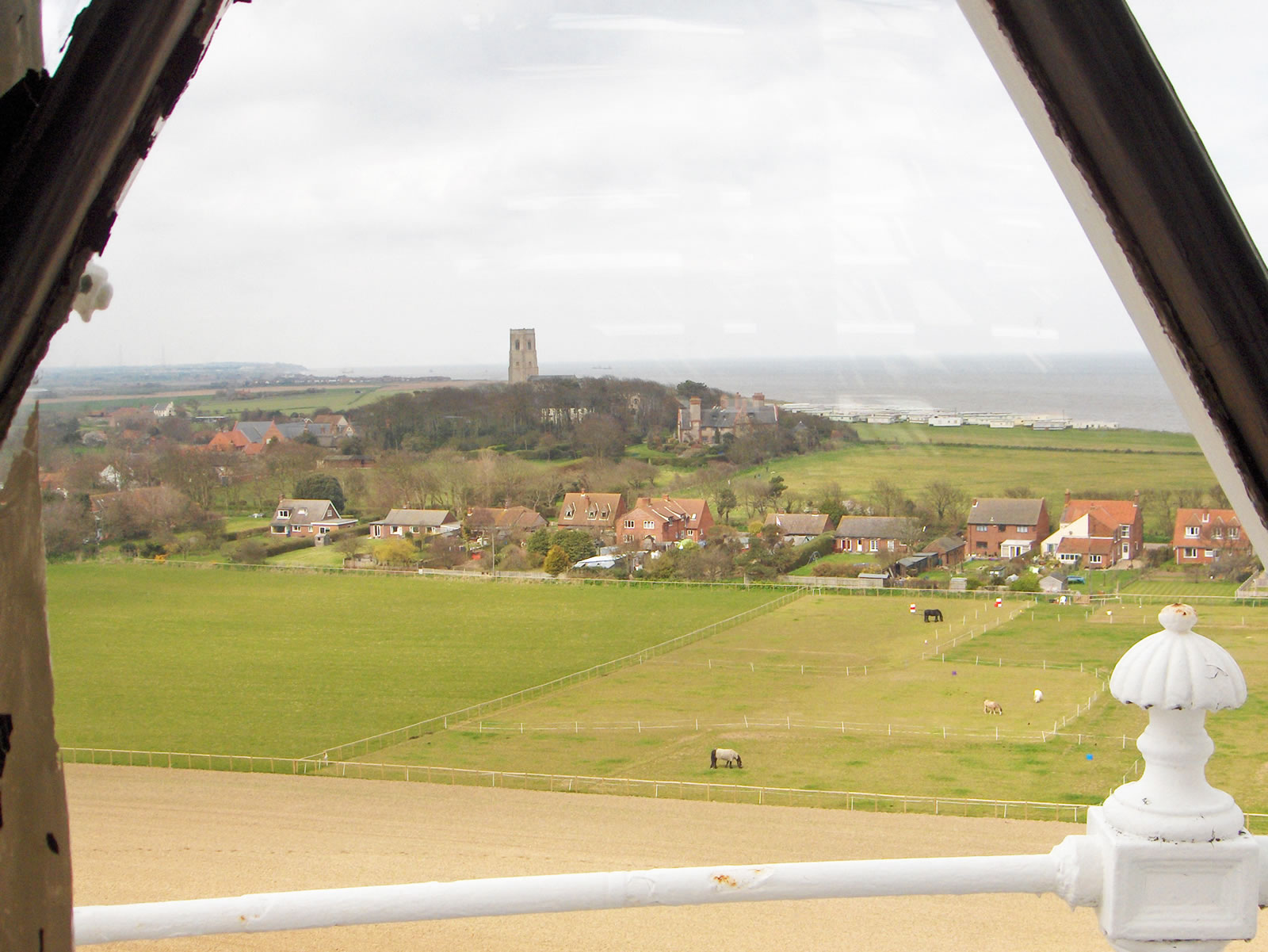
The views of the coast and village are spectacular - on a clear day you can see for about 13 miles.
Happisburgh Lighthouse
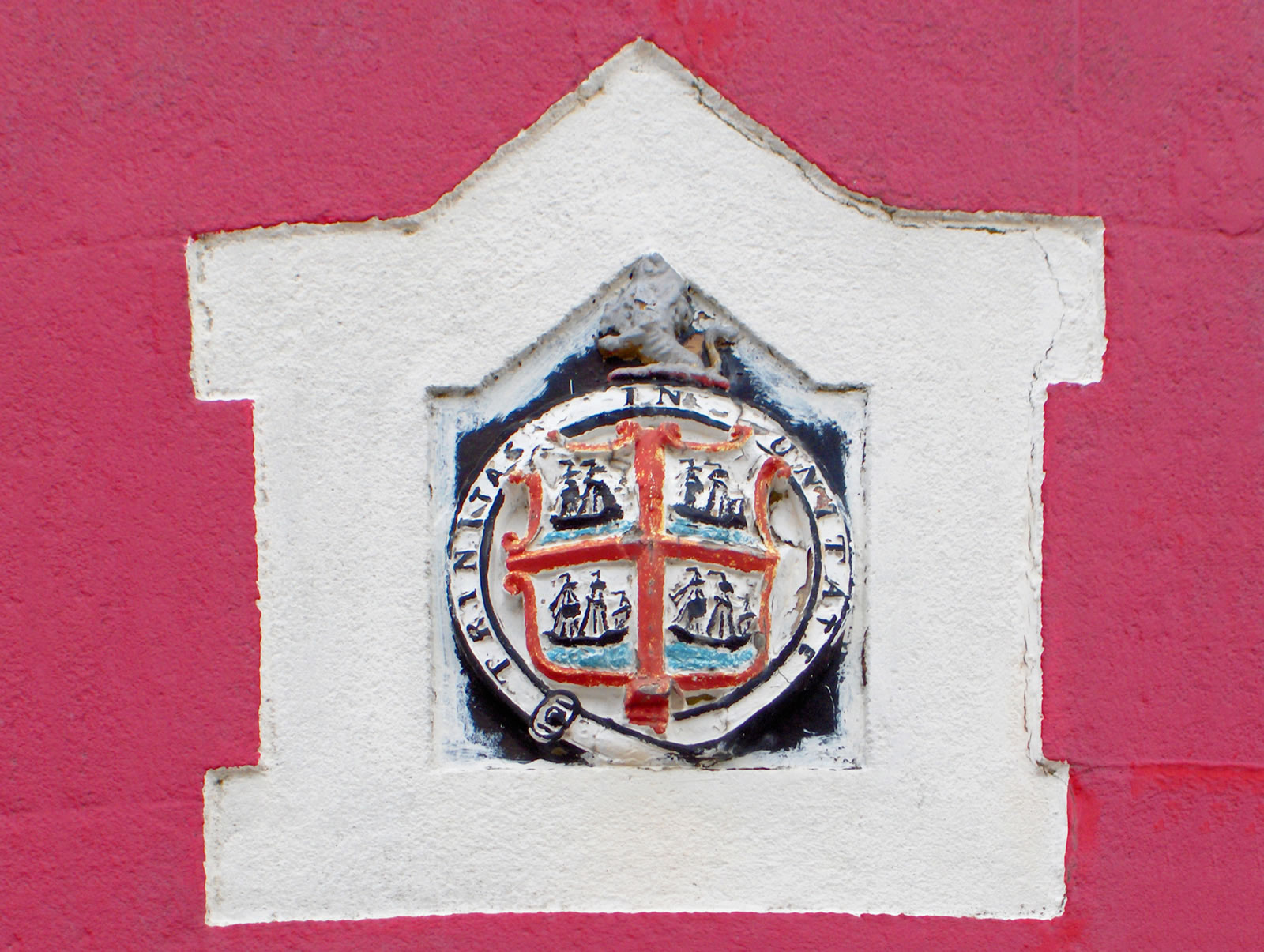
The Trinity House Coat of Arms on the lighthouse
Happisburgh Lighthouse entrance door
Inside the lighthouse
The spiral staircase taking visitors to the top
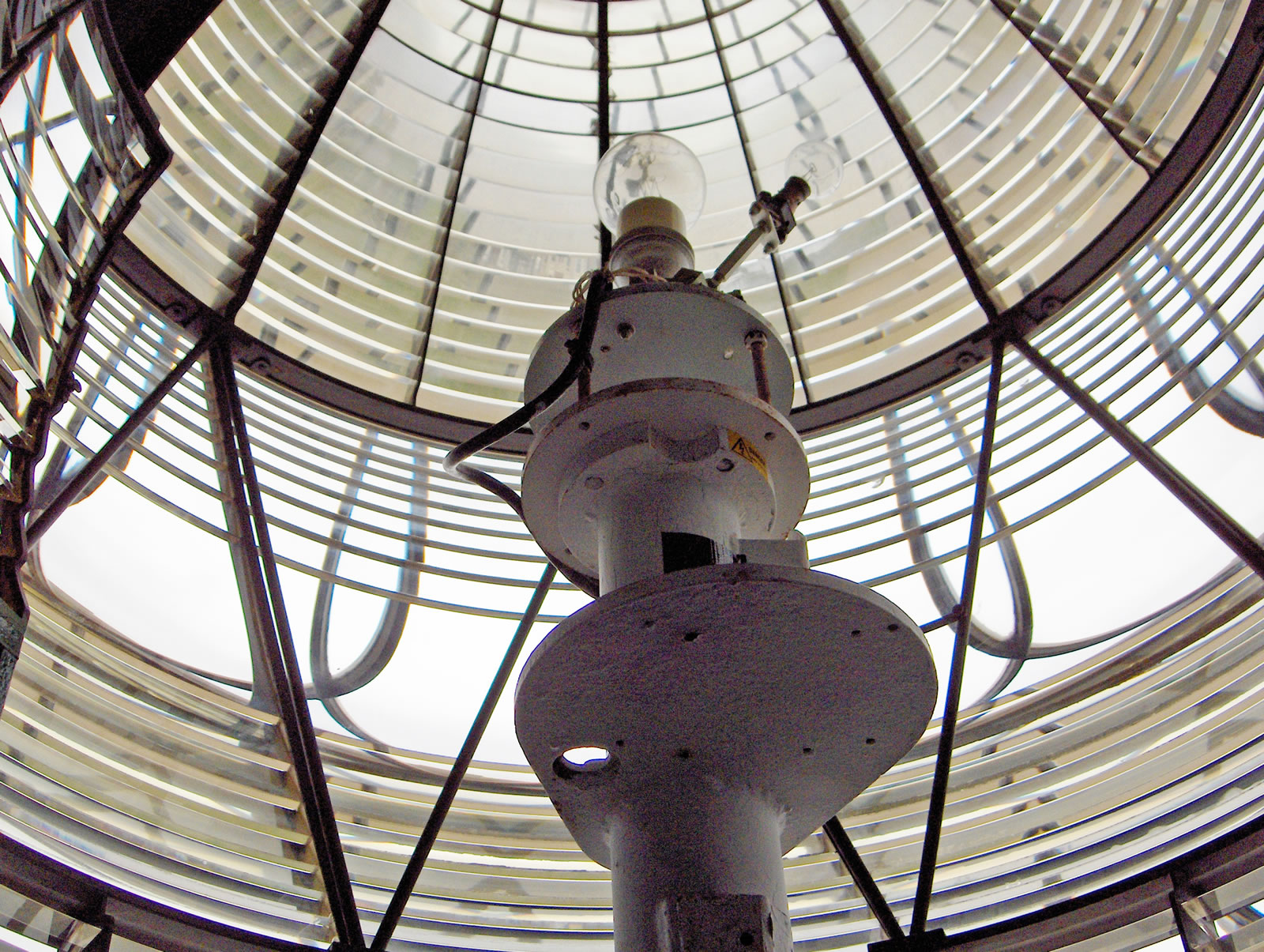
The lamp at the very top of the lighthouse
The amazingly small bulb powering the lamp
The view of Happisburgh Church from the Lighthouse
The view up the lighthouse from the bottom
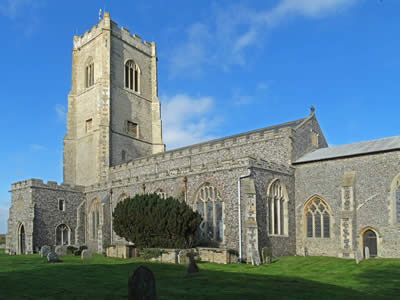
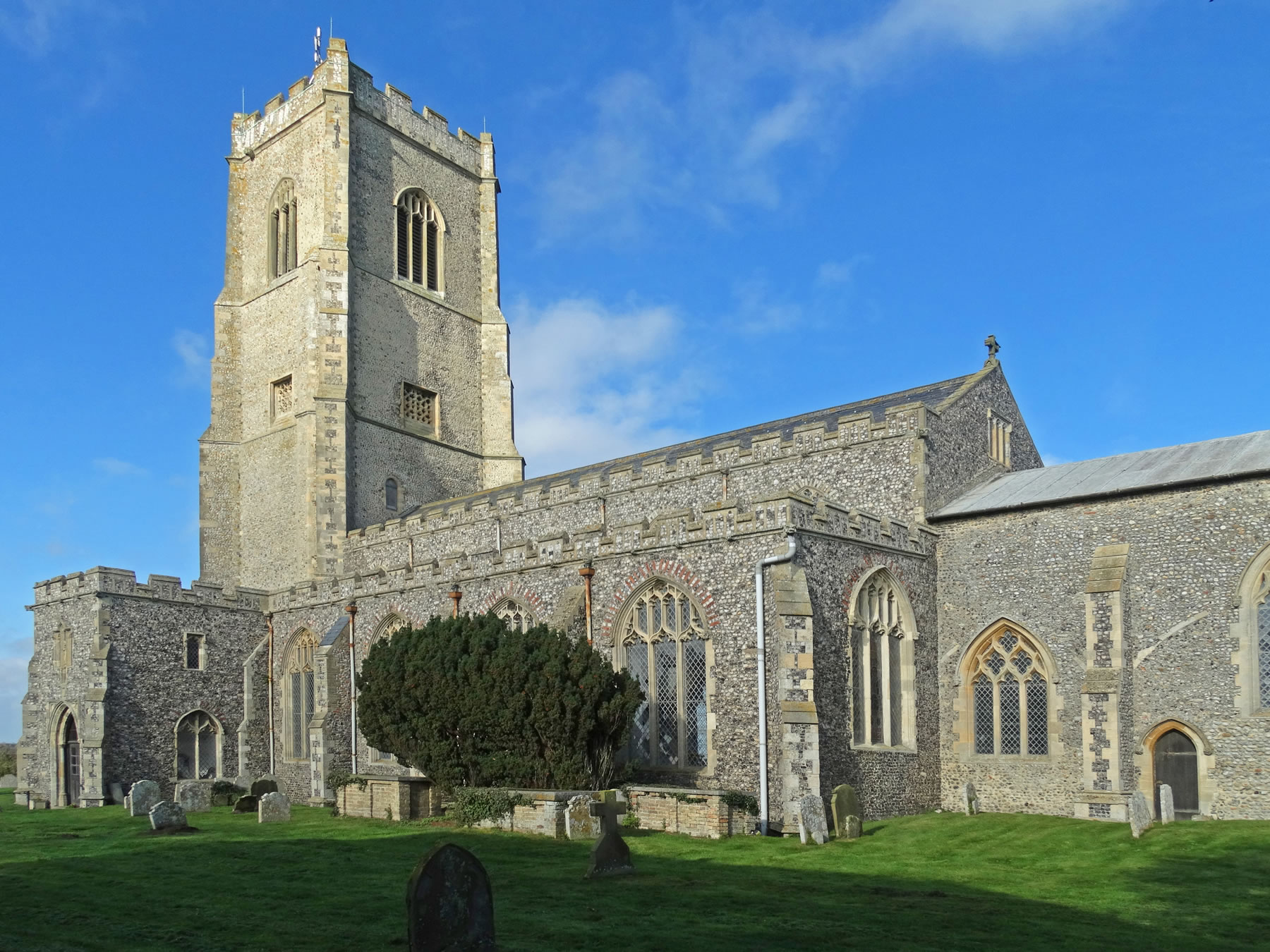
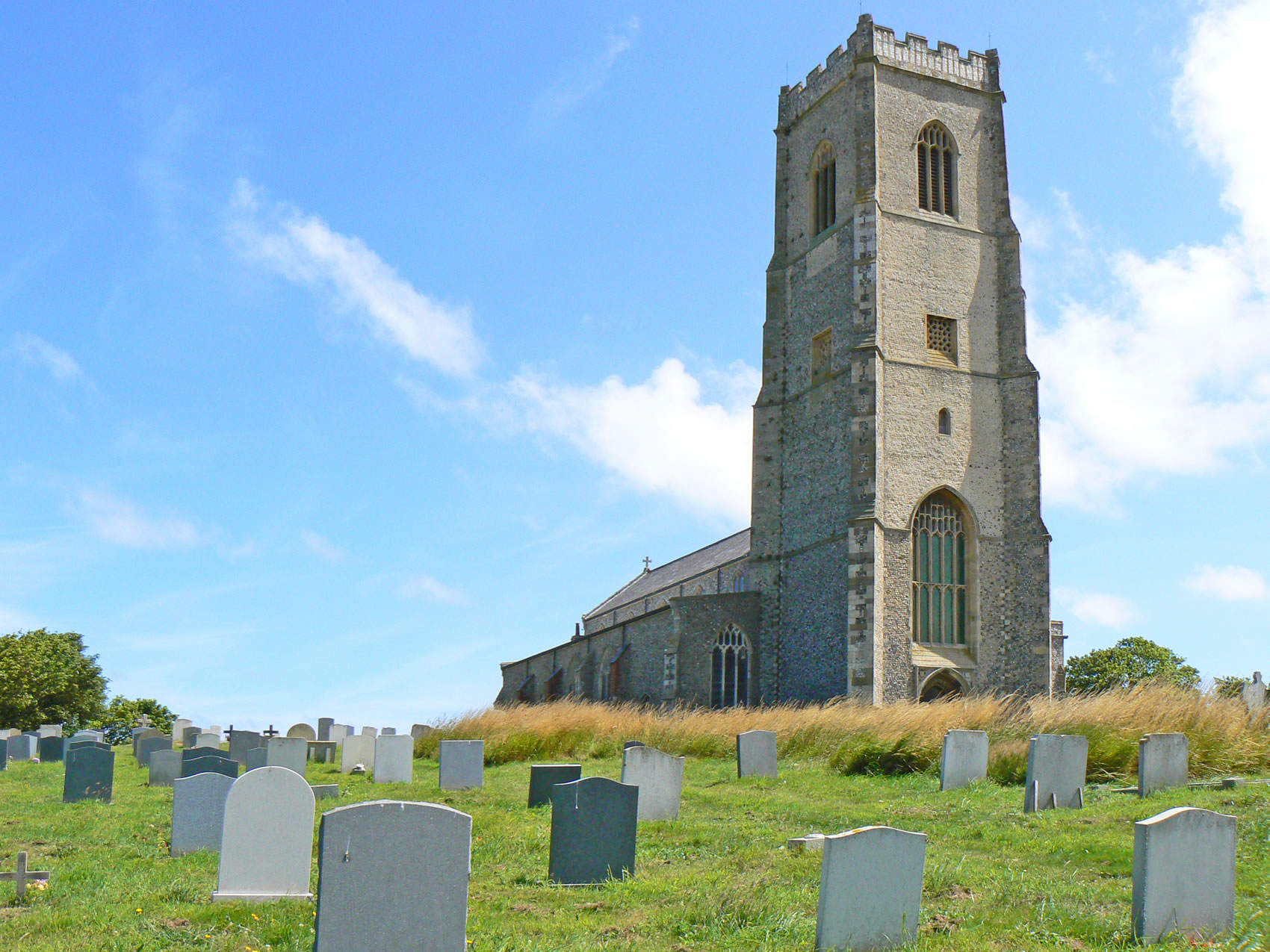
In a commanding position, overlooking the sea is the large village church of St Mary's.
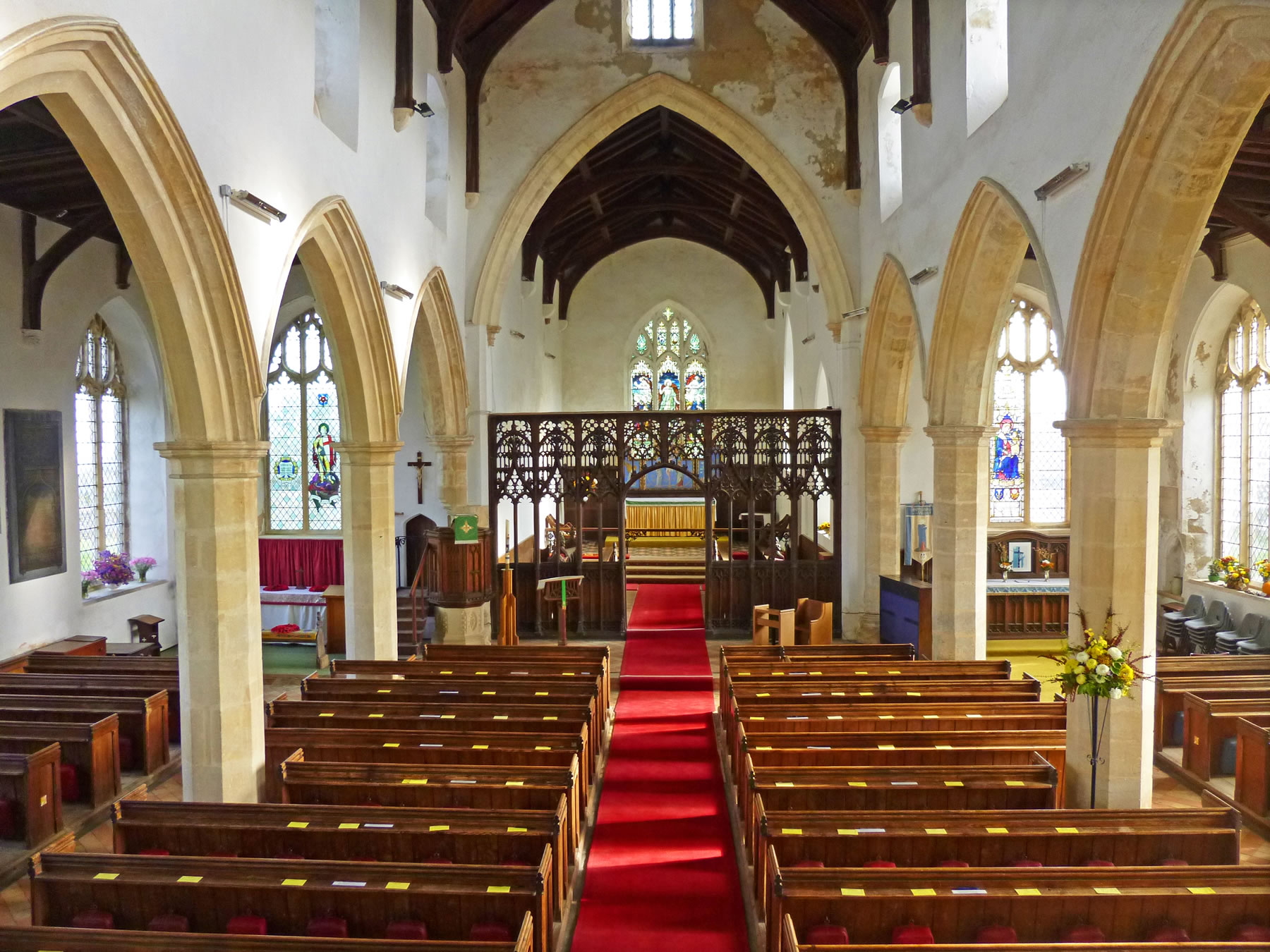
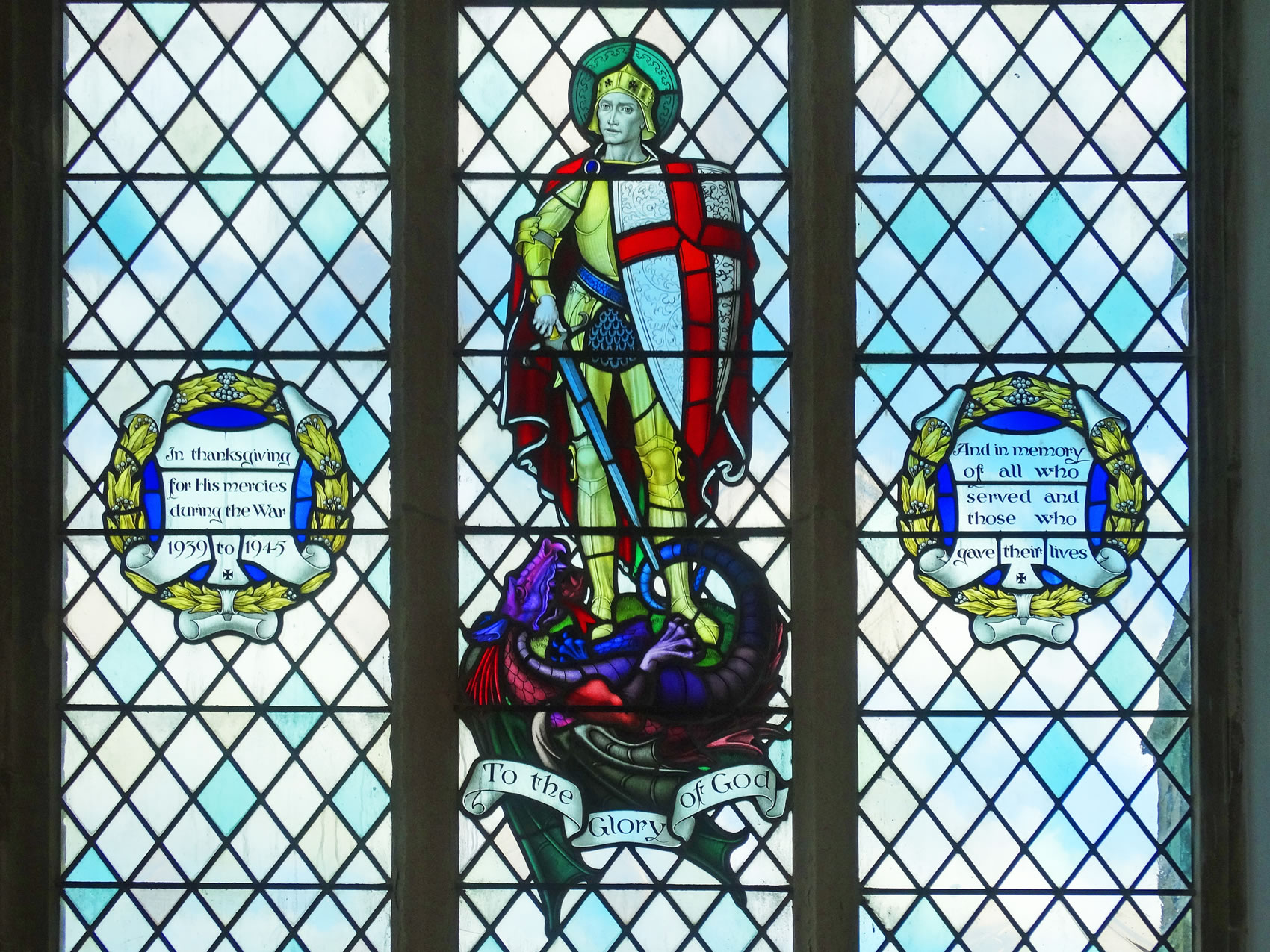
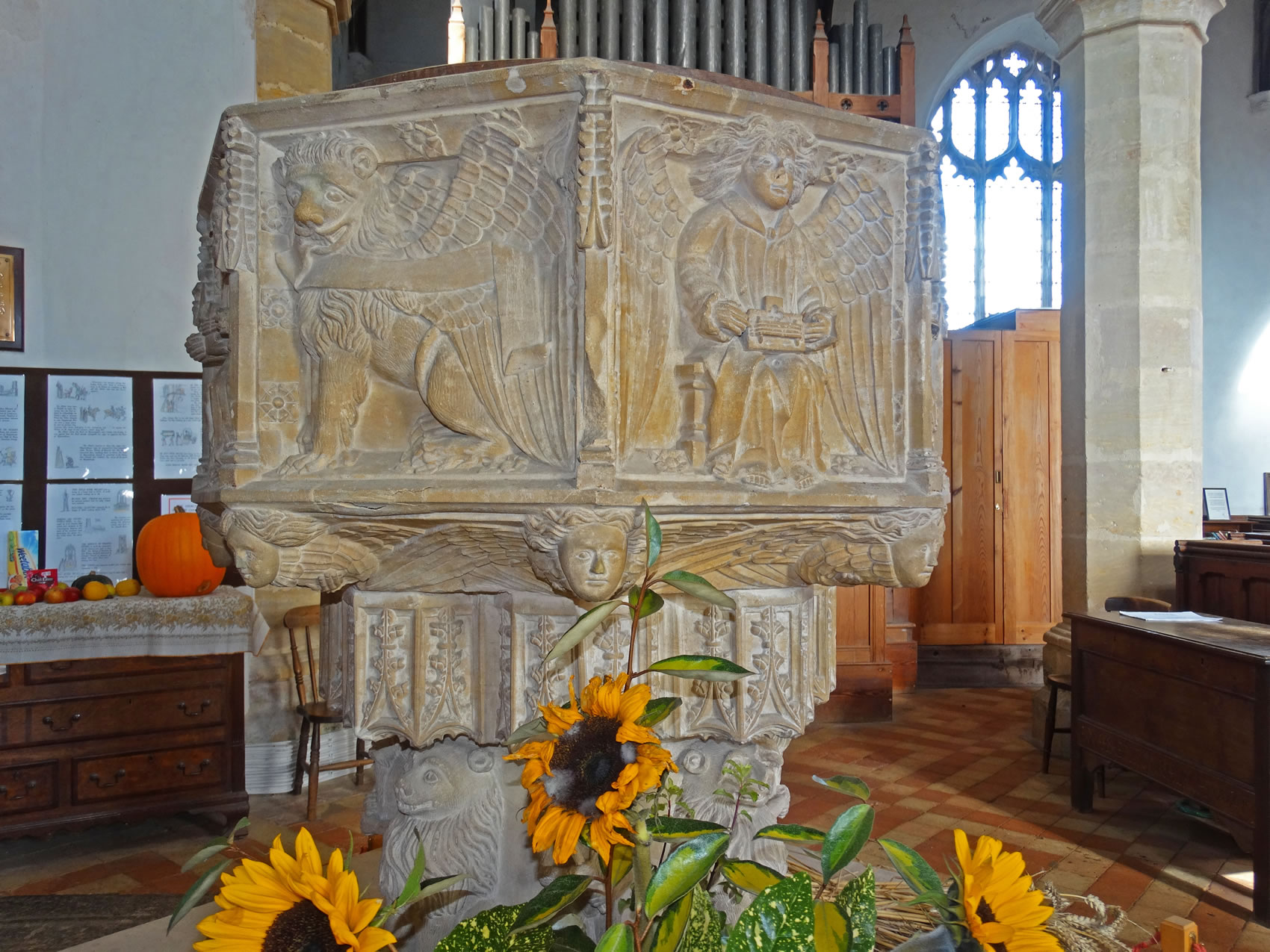
It has a very tall tower (110 feet) and you are able to climb the ladders to the top some weekends during the summer. Inside, the church is very spacious and contains some medieval features, such as the backlight to the rood at the east end of the nave. The church also has a splendid 15th century octagonal font and a stained glass window showing an English knight.
Happisburgh church of St. Marys
Inside Happisburgh church
Stained glass window of an English Knight
15th Century Octagonal Font
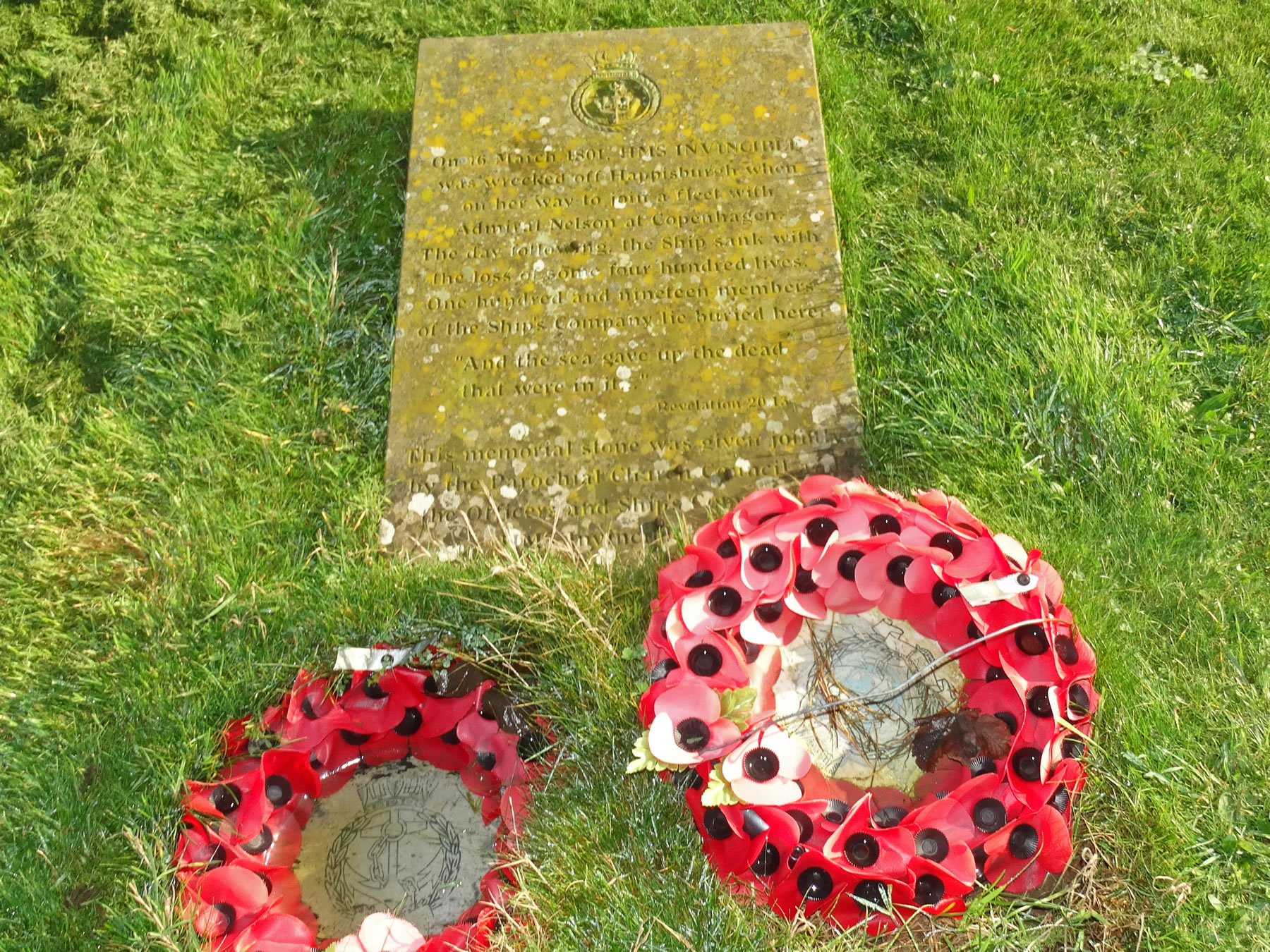
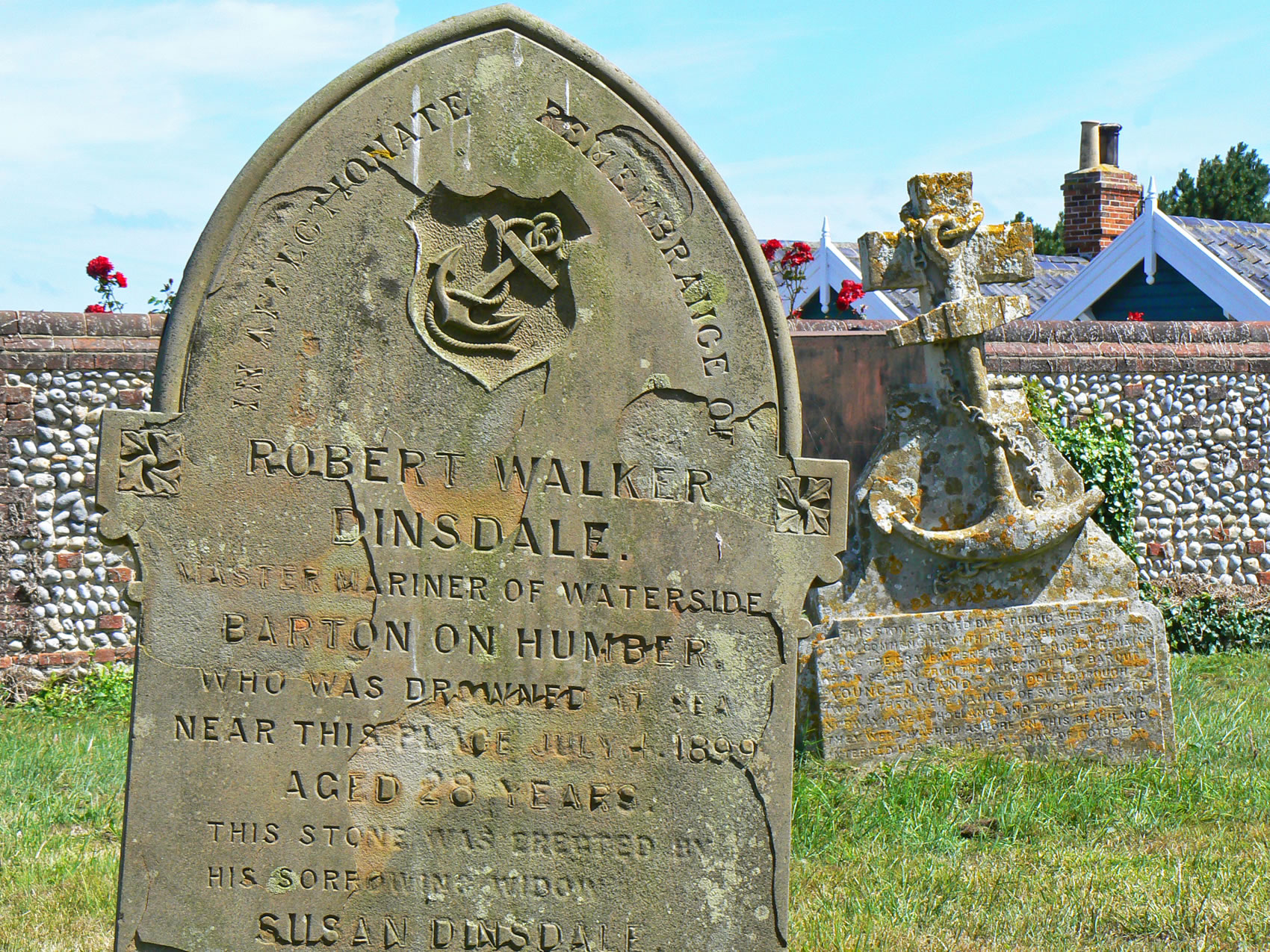
The church graveyard contains the graves of many sailors drowned in accidents off the coast of Happisburgh. The most famous incident took place in 1801 when the ship HMS Invincible was wrecked offshore with the loss of 119 lives. The Invincible was on route to join Nelson's fleet at Copenhagen, when it struck a sandbank called Hammond's Knoll, just east of Happisburgh, due to strong wind and tides. In 1804, HMS Hunter, a revenue cutter, was lost in the same place and nearly all her crew were lost and are buried in Happisburgh. Various monuments scattered around the churchyard commemorate these and other crew members who lost their lives in the seas near Happisburgh.
Happisburgh Church Graveyard
The memorial to HMS Invincible
Various graves and memorial to sailors drowned near Happisborough
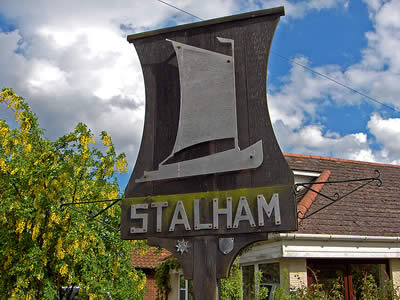
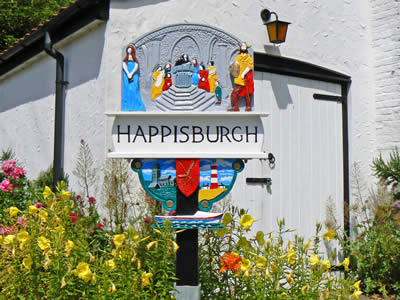
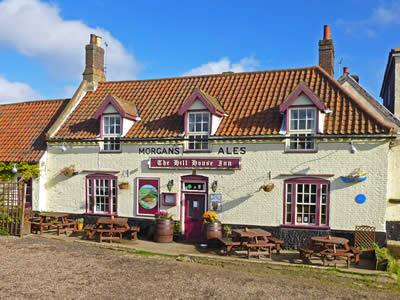
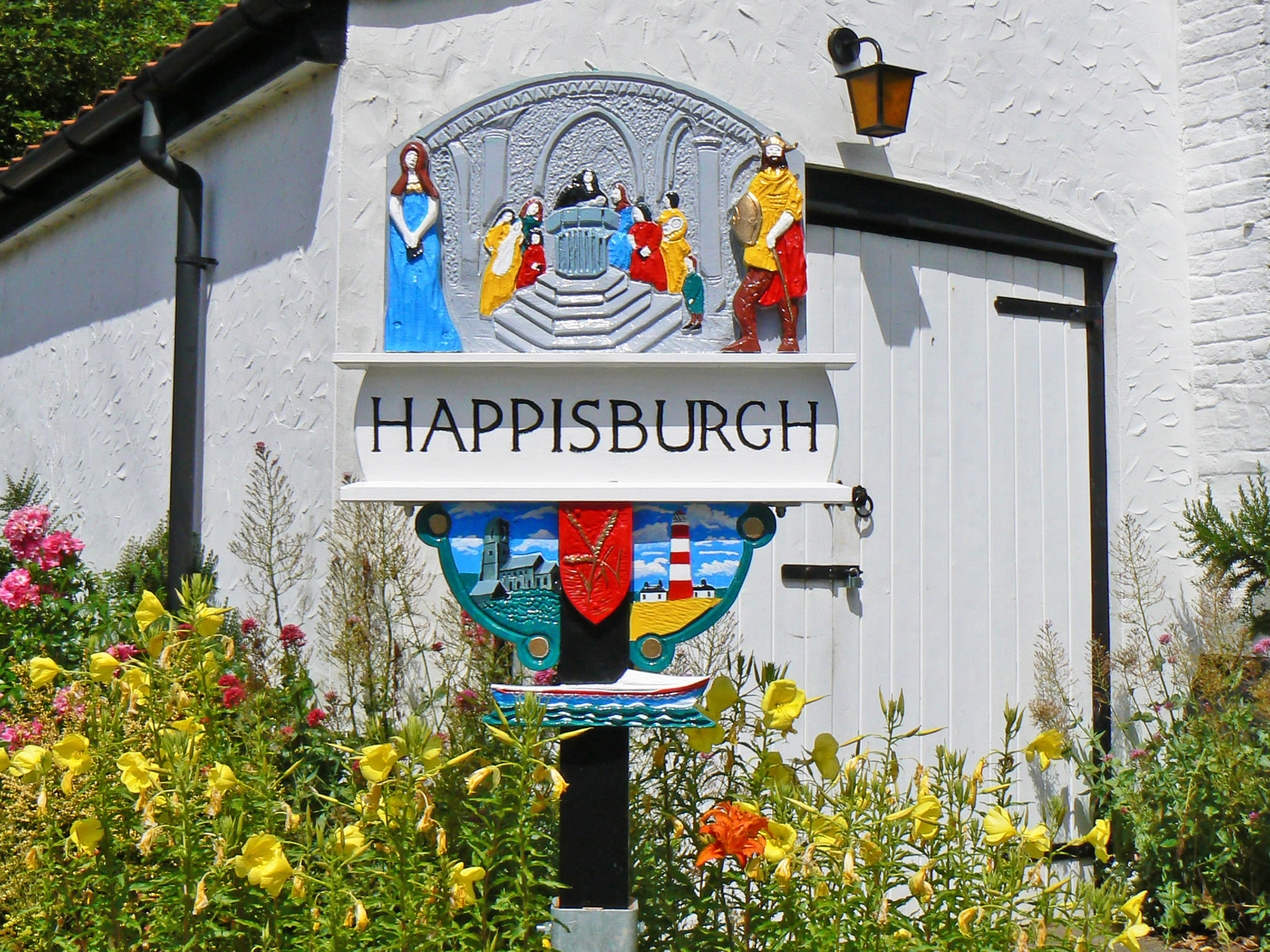
Next to the church is the village pub The Hill House and just below the pub is the colourful village sign. The sign depicts some key points in the history of the village. The figure on the right of the sign is Edric the Dane, who prior to the Norman Conquest was lord of the village. After the Norman's kicked him out, the village eventually passed on to Roger Bigod, whose daughter Maud – on the left of the sign – married William d'Albini, who was given the village at Maud's wedding! In the centre is the Rev Thomas Lloyd who claimed the reason that children were not being baptised was because their parents could not afford to pay for a party afterwards! He offered to put on a party himself, and on Whit Sunday 1793, he baptised 170 children! The village itself has many flint and thatch cottages situated on pretty village lanes.
Happisburgh Pub, The Hill House
Happisburgh Village Sign
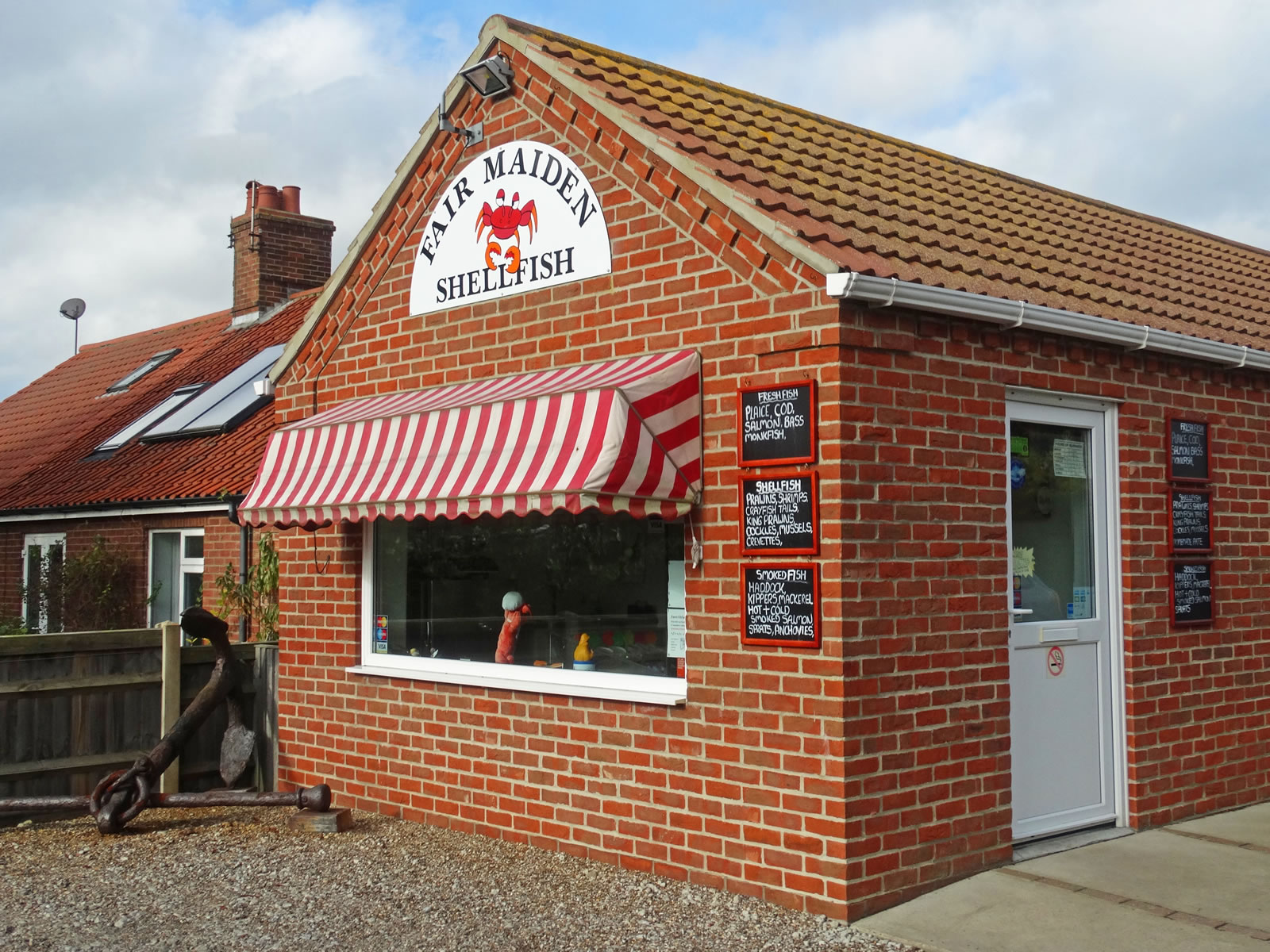
Fair Maiden Shell Fish Sop
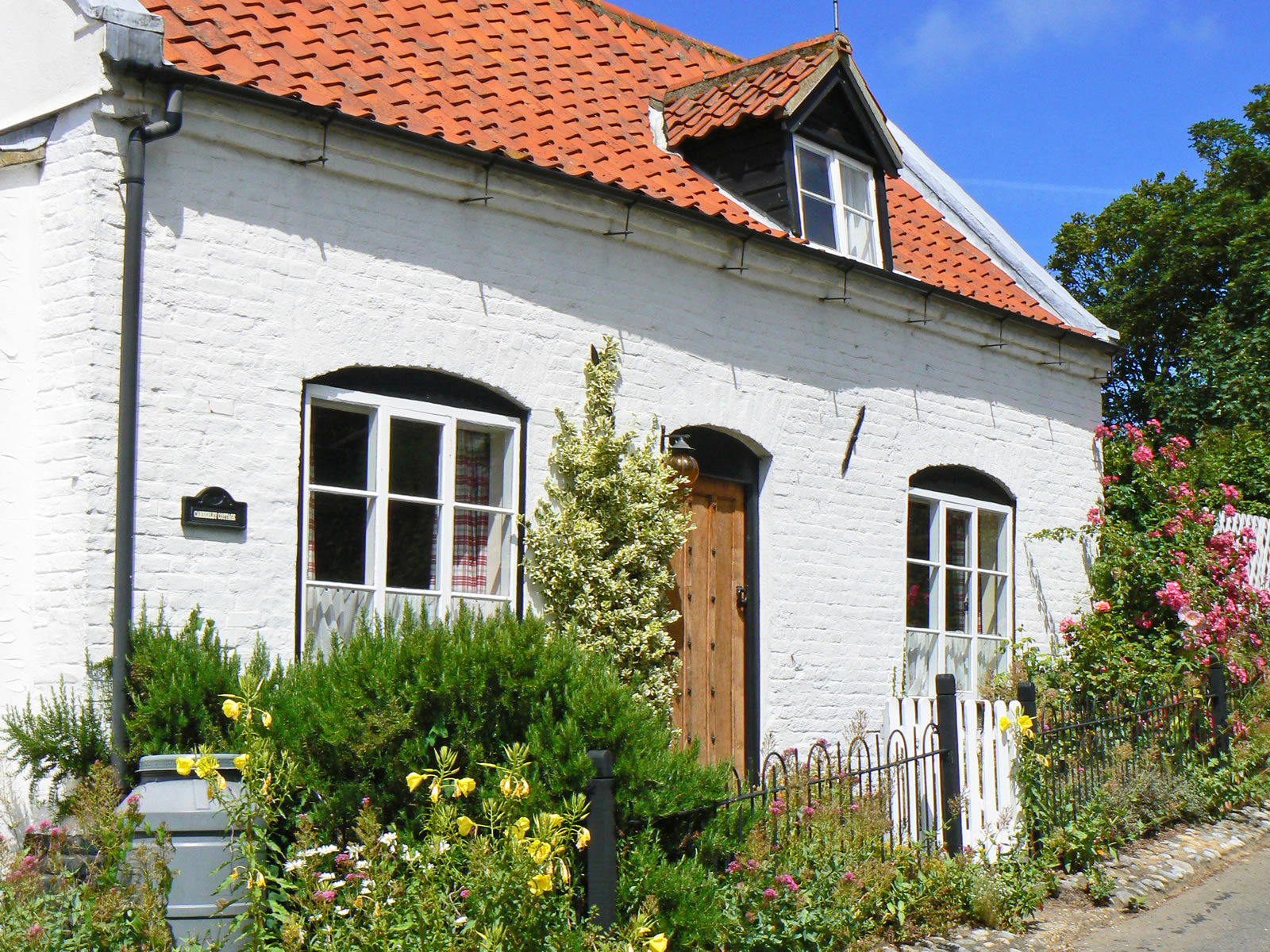
Pretty Cottages in Happisburgh Village
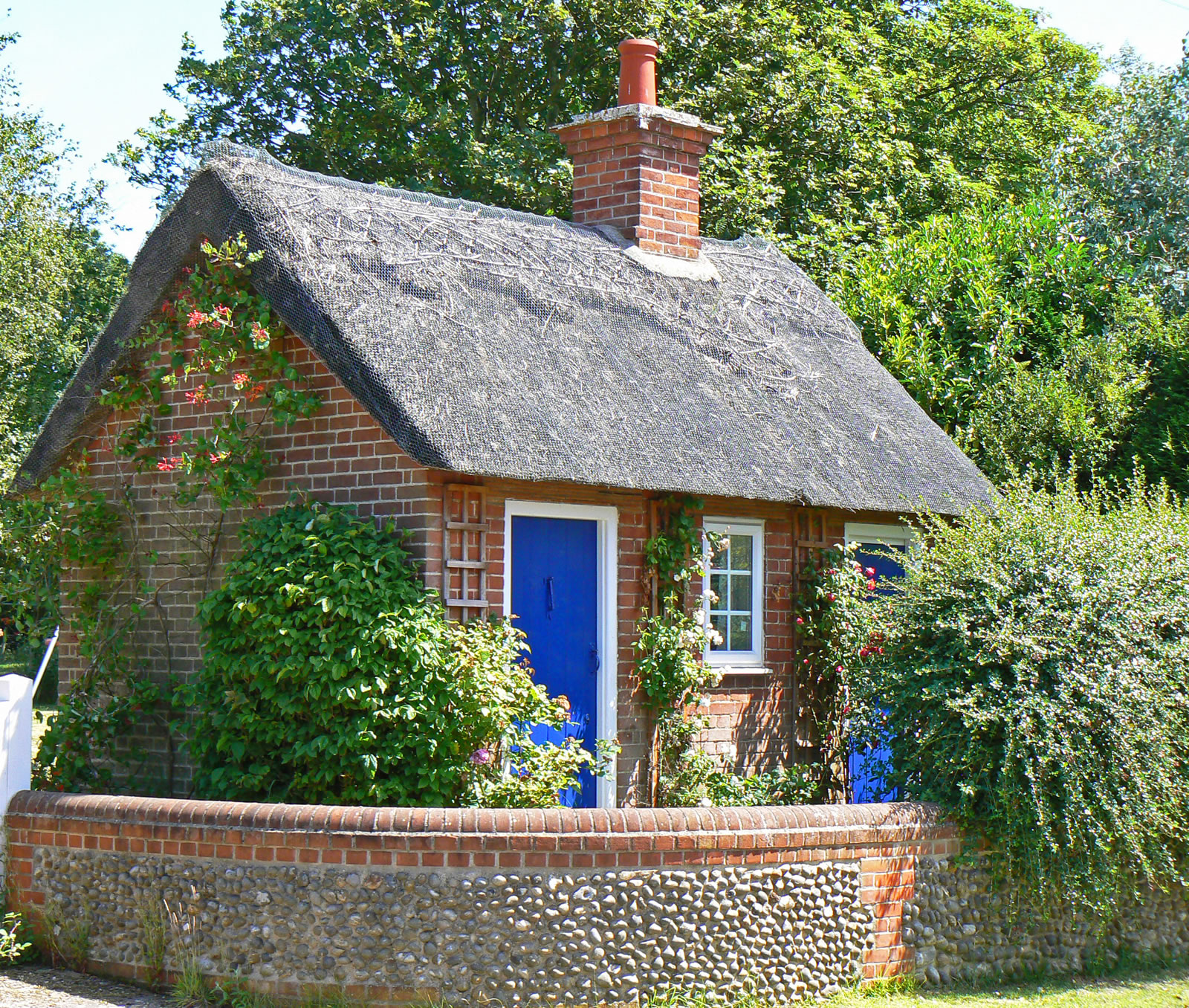
Small thatched building in Happisburgh
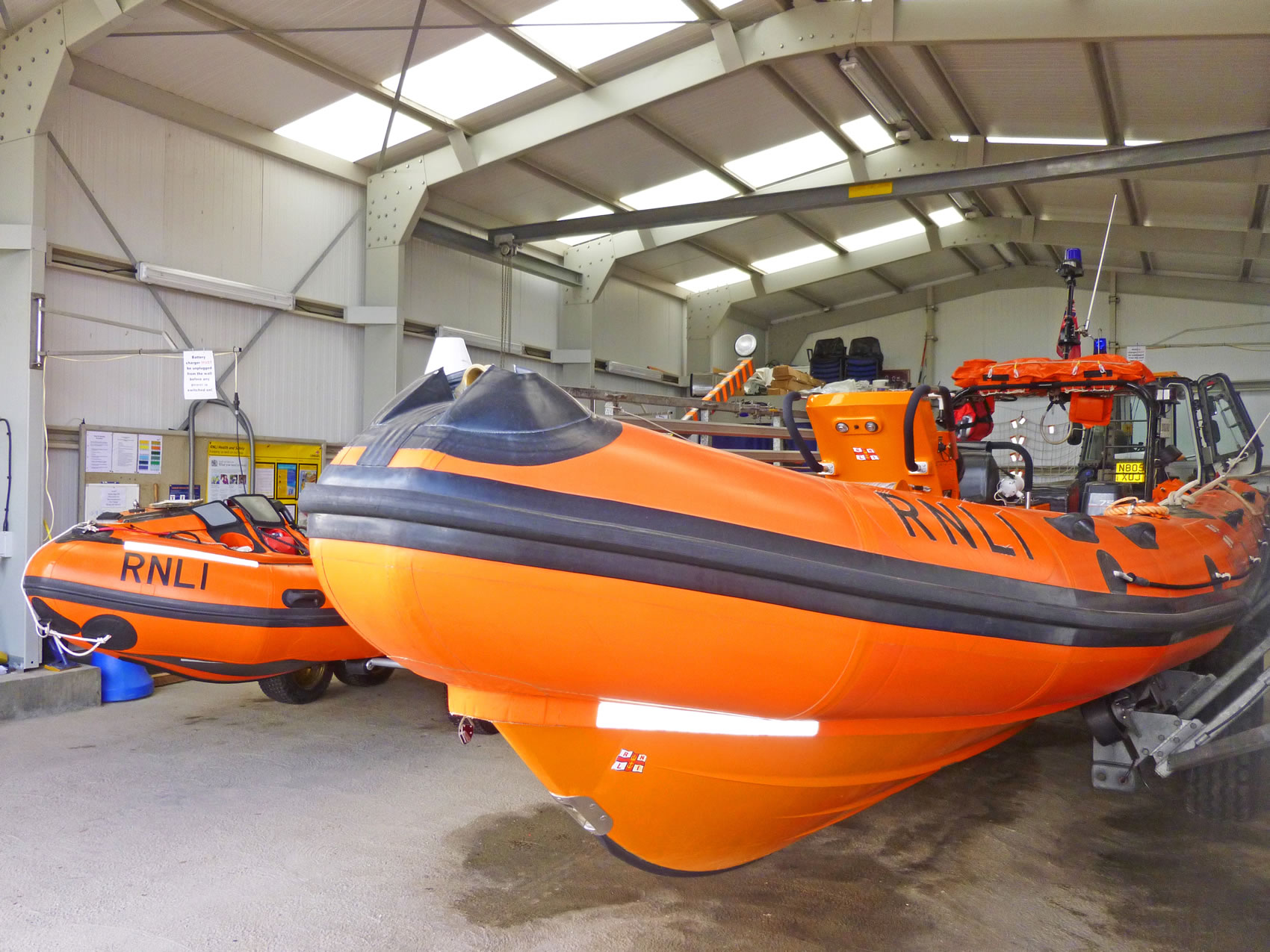
A good place to visit for walkers and tea-room lovers is Cart Gap, just south of Happisburgh. The gap and ramp in the sea defence give access to the sea for the Happisburgh RNLI Lifeboats. The station contains a D-607 Spirit of Berkhamsted D-Class Lifeboat and a B-742 Douglas Paley Atlantic 75 Lifeboat; both of which can be viewed when the crew are in attendance. Along the lane leading to Cart Gap you will find Smallsticks Cafe. This wonderful tea room serves a good selection of hot and cold drinks, snacks and meals (dogs allowed in the garden only). The area is popular with walkers as the Norfolk Coast Path offers attractive walks north to Happisburgh or south to Eccles and Sea Palling (the path north is excellent for blackberry picking in autumn :)
Cart Gap
Happisburgh RNLI Lifeboats
Smallsticks Cafe
Norfolk Coast Path towards Happisburgh from Cart Gap
Property overlooking the sea adjacent to the path
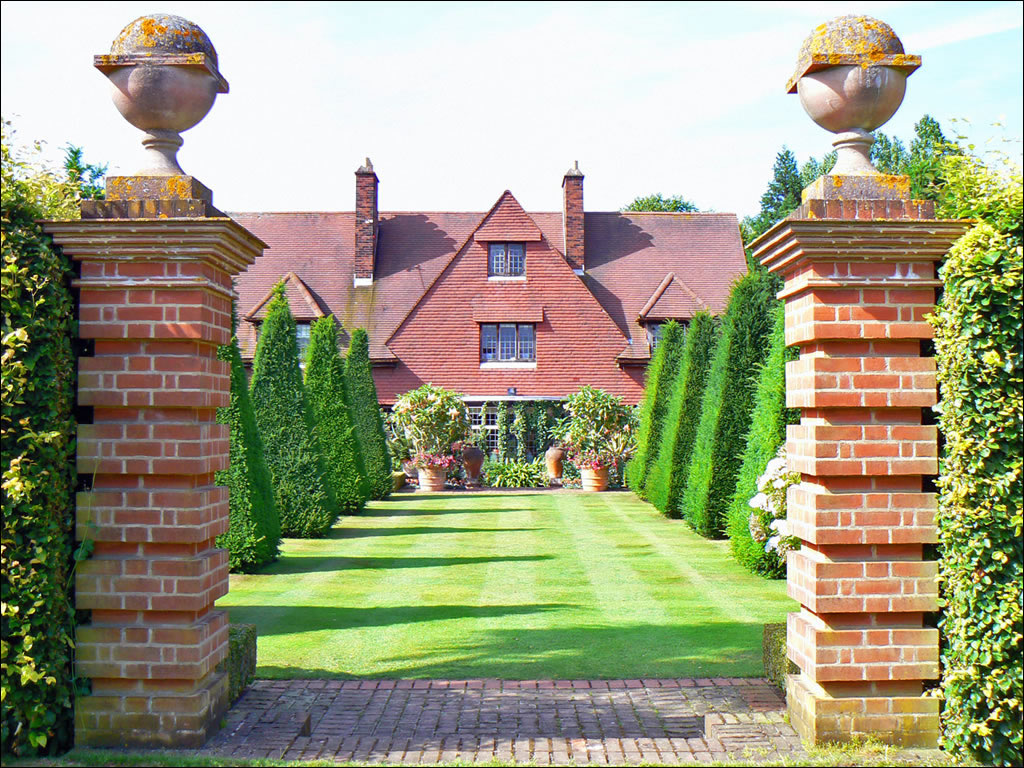
At nearby East Ruston are the gardens of the Old Vicarage. These gardens are one of the most remarkable and enjoyable gardens made in recent years. Created by Alan Gray and Graham Robeson, now 15 years old and expanding at a rate of knots, it is a feast of formal design, and decorative exuberance.
East Ruston Old Vicarage Gardens near Happisburgh
East Ruston Old Vicarage Gardens near Happisburgh
Happisburgh Summary of What to SEE and DO
Take a walk on the beach or the Norfolk Coast Path to/from Cart Gap
Take a refreshment in the village pub or Smallsticks Cafe at Cart Gap
Enjoy a stroll through the village and the views of the lighthouse and church
Explore the village church - climb the tower (when open) - see the sailor memorials
Visit the lighthouse and climb to the top! (only open certain dates)
Visit the gardens at nearby East Ruston
Our Verdict
Happisburgh is a lovely East Norfolk village. It has been the focus to media attention because of the cliff erosion, but the village offers 2 magnificent attractions in the lighthouse and church - you should also visit the excellent cafe at Cart Gap.
Readers Comments
Thank you for such a inspiring display of photos. I spent the first 10 years of my married life holidaying in Happisborough at the caravan park which was owned by Mr.Lomax. All your pictures brought back years of such happy times and memories. Now that I'm retired, I am very eager to return and retrace our youthful wanderings around Norfolk. Please accept my many thanks for reminding me of those bye gone days. Regards John Hawkins.









 Take a walk on the beach or the Norfolk Coast Path to/from Cart Gap